
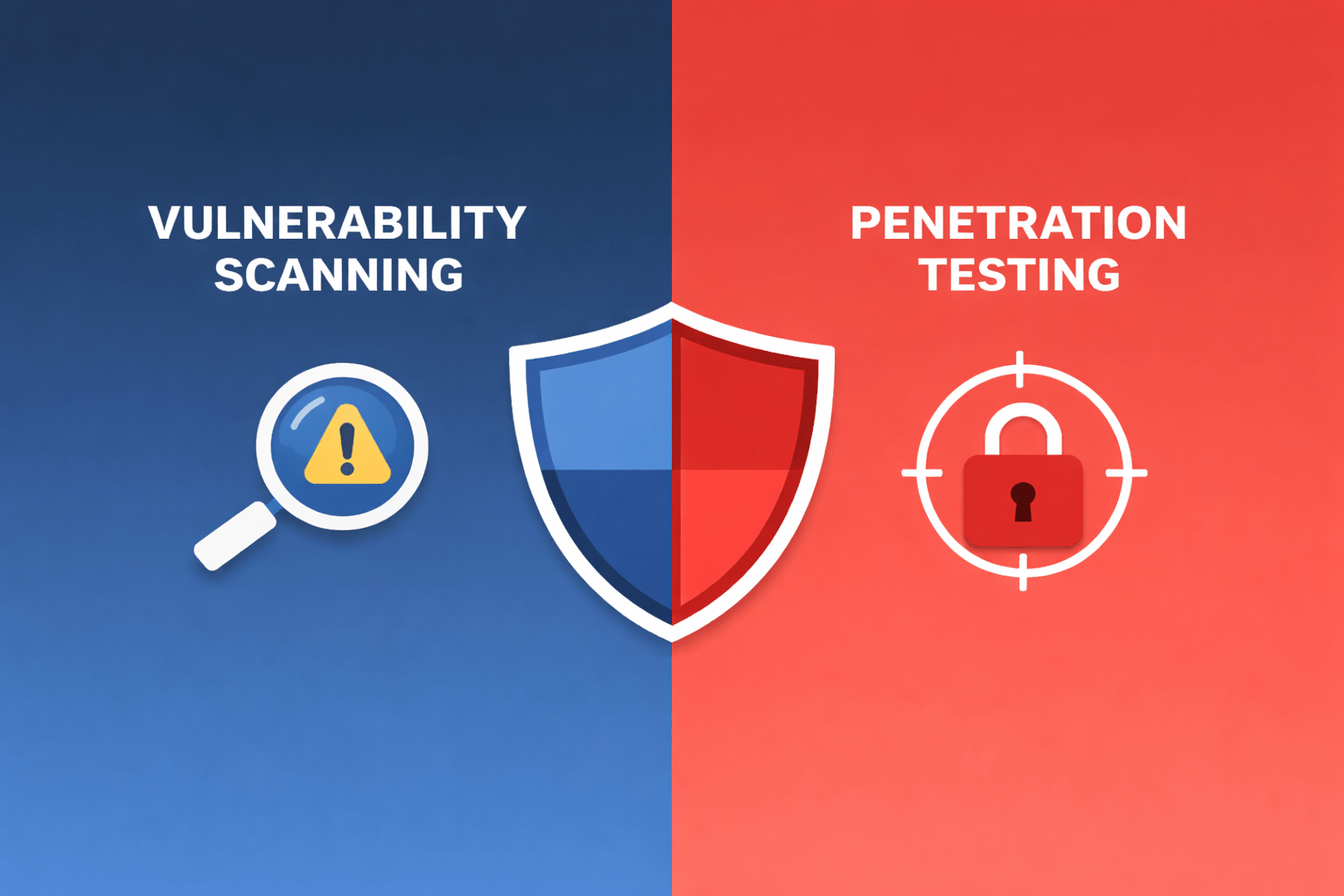
The Difference Between Vulnerability Scanning and Penetration Testing Effective security programs don’t choose between these approaches. They use both, and they understand what each one is designed to do. Security Assessments March 9, 2026 Most organizations have invested heavily in cybersecurity tools, but having the right software in place doesn’t automatically mean your defenses hold up under pressure. At some point, you have to actually test them. Two methods come up repeatedly in these conversations: vulnerability scanning and penetration testing. They’re often treated as interchangeable, but they’re not. Confusing the two can leave significant gaps in how you understand your actual risk exposure. Knowing what each approach does, and what it doesn’t do, is the starting point for making smarter decisions about your security posture. What Vulnerability Scanning Is Vulnerability scanning is an automated process that identifies known weaknesses across your systems, networks, and applications. The tool compares what it finds against established databases of vulnerabilities, misconfigurations, and outdated software. A typical scan surfaces issues like: Missing security patches Outdated software versions Misconfigured services Known vulnerabilities in operating systems or applications Because it’s automated, scanning can run regularly and at scale without demanding significant manual effort. That makes it a practical option for maintaining baseline visibility across large environments. The limitation is scope. Vulnerability scanning tells you what’s there. It doesn’t tell you what an attacker could actually do with it. What Penetration Testing Is Penetration testing starts from a different premise entirely. Rather than cataloguing known weaknesses, a penetration test asks a more direct question: if someone were actively trying to get in, how far would they get? Security professionals conducting a penetration test simulate real attack scenarios. They actively attempt to exploit vulnerabilities, chain weaknesses together, escalate privileges, and trace how an attacker could move laterally through an environment. The goal isn’t a list of findings. It’s a demonstration of what exploitation actually looks like in practice. That distinction matters because vulnerabilities rarely exist in isolation. A penetration test reveals how individual weaknesses interact and what a determined attacker could realistically accomplish. Why the Difference Matters Vulnerability scanning and penetration testing aren’t competing approaches. They answer different questions. Scanning is built for consistency. Run it regularly, track what changes, and use the results to prioritize patching and remediation. It’s foundational for ongoing security hygiene. Penetration testing is built for depth. It moves past detection and into impact, showing what’s actually exploitable, how far that exposure extends, and what it would take to address it meaningfully. That kind of insight is difficult to get from automated tooling alone. Organizations that rely only on scanning know where their weaknesses are, but not what an attacker would do with them. Organizations that only conduct penetration tests periodically may miss the steady accumulation of new vulnerabilities between engagements. Evaluating Security from Multiple Angles Effective security programs don’t choose between these approaches. They use both, and they understand what each one is designed to do. Automated scanning maintains ongoing visibility. Penetration testing validates whether your defenses hold up against realistic attack scenarios. Together, they provide a more complete picture: not just where vulnerabilities exist, but how they could be leveraged and what the real-world impact would be. Security gaps are rarely obvious until someone actively looks for them. That’s exactly the point. Related Articles All Posts Security Assessments The Difference Between Vulnerability Scanning and Penetration Testing March 9, 2026/ The Difference Between Vulnerability Scanning and Penetration Testing Effective security programs don’t choose between these approaches. They use both, and… Read More CATEGORIES <lidata-term-id=”15″> Risk and Compliance (0) <lidata-term-id=”16″> Security Assessments (1) <lidata-term-id=”18″> Security Guidance (0) <lidata-term-id=”2″> Security Strategy (0) <lidata-term-id=”17″> Threat Landscape (0) Have questions? We have answers. Contact us CONNECT WITH US Linkedin Facebook X-twitter Instagram